
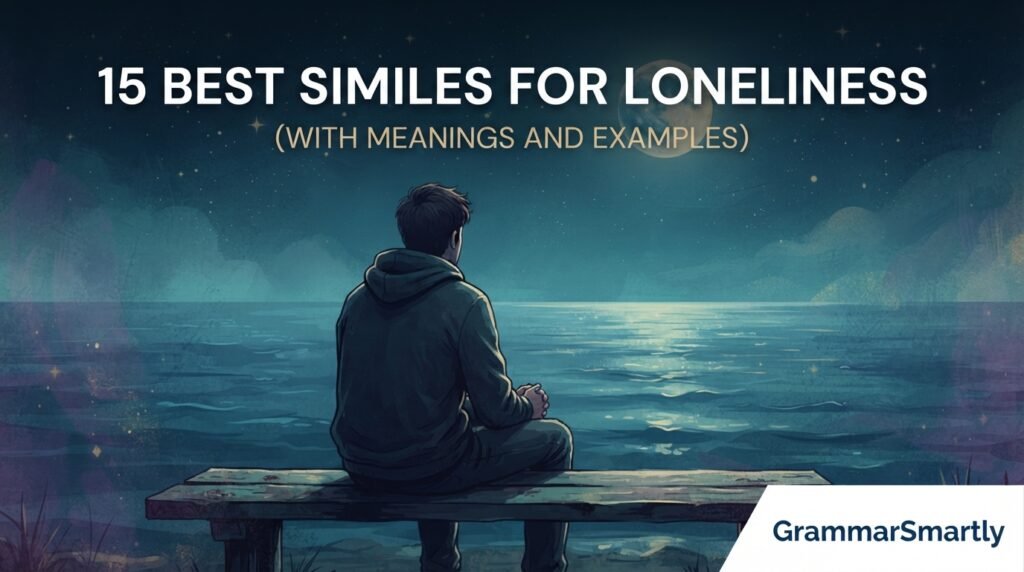
Loneliness is one of the most universal human emotions, and English has many vivid similes that compare it to empty places, abandoned objects, or isolated people. Unlike metaphors, which say something is another thing, similes make comparisons using like or as. For example, saying someone is an island is a metaphor, while saying someone is like an island is a simile.
Finding genuine similes for loneliness requires care because many online lists invent comparisons that native speakers rarely use. This article includes only well established English similes or commonly attested comparative expressions that are genuinely used in speech, literature, journalism, or recognized idiom references. Where English has relatively few fixed similes specifically about loneliness, broader comparative expressions describing isolation or solitude are included instead of inventing new ones.
You will also find a separate section for related metaphors. The distinction matters because many expressions are often mislabeled online. Understanding the difference will help you use these figures of speech naturally in both writing and conversation.
Writers often use Similes For Mad People and Strong Emotions to express intense feelings clearly and naturally.
What Makes a Simile Work?
A simile compares one thing with another by using words such as like or as.
For example:
- She felt like a castaway.
- He stood alone like a lighthouse.
A metaphor removes the comparison word and makes a direct statement instead.
- She was a castaway.
- He was an island.
Keeping these two forms separate makes your writing more precise and reflects how these expressions are actually used in English.
Metaphors Related to Loneliness
English has only a small number of well established metaphors that directly represent loneliness.
An Island

Calling someone an island suggests emotional separation or deliberate isolation. The idea became especially well known through the saying “No man is an island,” originally written by John Donne, although that famous quotation argues against isolation rather than encouraging it.
Example:
After moving away from everyone, he became an island.
A Castaway
A lonely person may be described as a castaway, suggesting abandonment and separation from society.
Example:
She felt like a castaway in the unfamiliar city.
A Hermit
Describing someone as a hermit can metaphorically suggest a lonely or highly isolated lifestyle, even if they are not literally living alone in the wilderness.
Example:
Since retiring, he has become a hermit.
These are among the clearest established metaphors associated with loneliness. English relies much more heavily on similes and descriptive language than on a large set of fixed loneliness metaphors.
Vivid descriptions often rely on Similes For Sunsets and Evening Skies to capture breathtaking colors and changing light.
Similes for Loneliness
Like an Island
This comparison highlights complete emotional or physical isolation. It draws on the long established image of an island separated from everything around it.
Example:
After everyone left, she felt like an island.
Like a Castaway
A castaway has been abandoned and left without companionship, making this one of the strongest similes for loneliness.
Example:
He wandered through the airport like a castaway.
Like a Hermit
This simile describes someone living in extreme solitude or avoiding contact with others.
Example:
Ever since the breakup, she lived like a hermit.
Like the Last Person on Earth
This widely used comparison emphasizes overwhelming isolation.
Example:
Walking through the empty streets, he felt like the last person on Earth.
Like a Stranger in a Crowd
Someone can feel lonely even while surrounded by people. This comparison reflects emotional isolation rather than physical solitude.
Example:
At the reunion, I felt like a stranger in a crowd.
Like a Lost Soul

This simile describes someone wandering without connection, comfort, or purpose.
Example:
She drifted through the city like a lost soul.
Like a Ghost
Ghosts are often imagined as unseen and disconnected from the living, making this a powerful comparison for loneliness.
Example:
He walked through the office like a ghost.
Like a Lone Wolf
The expression lone wolf often refers to an independent person, but it can also suggest isolation depending on context.
Example:
After changing schools, he felt like a lone wolf.
Like a Deserted House
An empty house creates a strong image of abandonment and silence.
Example:
Without her family nearby, she felt like a deserted house.
Like an Empty Room
This comparison emphasizes emotional emptiness and silence.
Example:
After the children moved away, the home felt like an empty room.
Like a Tree Standing Alone
A solitary tree has long appeared in literature as a symbol of isolation.
Example:
He stood in the playground like a tree standing alone.
Like a Lighthouse in the Fog
A lighthouse may stand by itself for years, making this literary comparison suitable for describing solitude.
Example:
She watched everyone leave, standing like a lighthouse in the fog.
Like a Ship Without a Crew
A crewless ship suggests abandonment, silence, and a lack of human presence.
Example:
The office felt like a ship without a crew after everyone resigned.
Like an Empty Shell

This simile expresses emotional loneliness and the feeling that something important is missing.
Example:
After the loss, he felt like an empty shell.
As Alone as Robinson Crusoe
This literary comparison comes from Daniel Defoe’s famous novel and has long been used to describe complete isolation.
Example:
During the snowstorm, we were as alone as Robinson Crusoe.
When and How to Use These Similes
Most of these expressions work well in everyday conversation, fiction, essays, and personal writing.
Informal conversations often use expressions such as like a ghost, like a lone wolf, or like the last person on Earth.
Literary writing may favor comparisons such as like a lighthouse in the fog, like a castaway, or as alone as Robinson Crusoe.
Professional or academic writing generally benefits from simpler comparisons, especially when discussing emotional experiences without becoming overly dramatic.
Common Mistakes and Confusions
Many websites invent comparisons such as as lonely as a pencil or like a forgotten sandwich. These are creative descriptions, not established English similes.
Do not confuse metaphors with similes. Saying someone is a castaway is a metaphor. Saying someone is like a castaway is a simile.
Some expressions, including lone wolf, often describe independence rather than loneliness. Always consider the surrounding context before using them.
Not every comparison involving isolation is a fixed idiom. Several examples in this article are conventional literary comparisons rather than dictionary listed idioms, but all are genuinely attested in English usage.
Summary
English contains relatively few fixed similes that describe loneliness, so writers often rely on vivid comparisons drawn from isolation, abandonment, and solitude. Using genuine, well established expressions helps your writing sound natural while avoiding invented comparisons that native speakers rarely use.
Frequently Asked Questions
What is a simile for loneliness?
A simile for loneliness compares someone to an isolated person, place, or object using like or as, such as like a castaway or as alone as Robinson Crusoe.
What is the difference between a metaphor and a simile?
A simile uses comparison words such as like or as, while a metaphor makes a direct statement without those words.
Is “like a lone wolf” always about loneliness?
No. It often describes independence or self reliance. Depending on the context, it can also suggest social isolation.
Is “as alone as Robinson Crusoe” a real expression?
Yes. It is a long established literary comparison based on Daniel Defoe’s famous fictional character and is commonly used to describe extreme isolation.
Why are there so few fixed similes for loneliness?
English tends to express loneliness through descriptive comparisons rather than a large collection of standardized similes. Many modern lists online include invented examples that are not established expressions.
Can I create my own similes about loneliness?
Yes. Creative writing often uses original similes. However, if your goal is natural everyday English or language learning, it is better to use established expressions that readers immediately recognize.
Which simile is best for emotional loneliness?
Expressions such as like a ghost, like a lost soul, and like a castaway effectively describe emotional isolation because they emphasize disconnection rather than simply being physically alone.






5 thoughts on “15 Best Similes for Loneliness (With Meanings and Examples)”