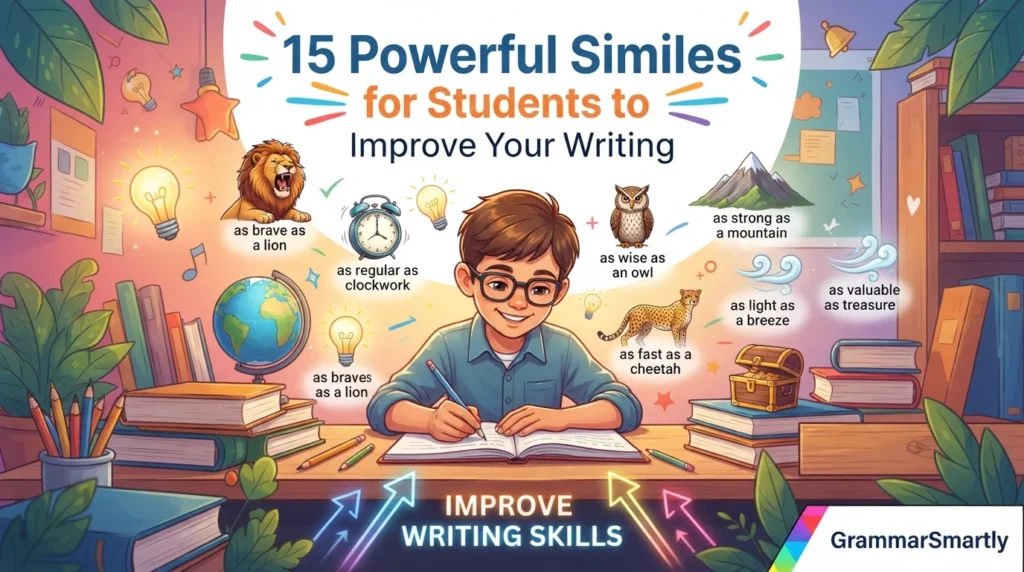
Students are often compared to other people, animals, or objects to describe how they study, behave, learn, or perform in school. English has many genuine similes that writers and speakers use to praise hardworking students, describe nervous learners, or even criticize lazy study habits.
The expressions in this article are all genuine English similes or established comparisons that have been widely used in speech, literature, journalism, or everyday conversation. Some describe intelligence, while others focus on effort, concentration, memory, or classroom behavior. They are not exclusive to students, but they are frequently applied to students in appropriate contexts.
Not every comparison that mentions a student is a standard English simile. Likewise, many expressions about learning are metaphors rather than similes. This guide separates genuine similes from metaphors so the distinction remains clear. Each expression includes its meaning, an example of natural usage, and notes about when it works best.
Writers often compare Excel vs Accel spelling differences to avoid using the wrong word in professional or academic contexts.
What Makes a Simile Work?
A simile compares one thing to another using like or as. Instead of saying someone is something, a simile says they are like or as something.
For example:
- “She studies like a machine.” (Simile)
- “She is a machine.” (Metaphor)
The expressions below all follow the simile pattern and are established English comparisons.
Similes for Hardworking Students
As busy as a bee

This is one of the best known English similes. It describes someone who is constantly active and hardworking.
A student preparing for final exams might be described as as busy as a bee, spending long hours studying, completing assignments, and attending classes.
Example:
During exam week, Maya was as busy as a bee, barely taking any breaks.
This expression is informal to neutral and is suitable in both speech and writing.
Work like a dog
This simile emphasizes extremely hard work, often over a long period.
Although it can describe anyone, it is commonly used for students facing demanding coursework.
Example:
He worked like a dog to finish his science project before the deadline.
Because it highlights effort rather than intelligence, it often suggests determination.
Technical writers can distinguish Single vs Double Decker Cooler differences when describing industrial cooling equipment accurately.
Study like a machine

People sometimes compare an exceptionally dedicated student to a machine because they seem capable of studying for hours without stopping.
Example:
She studied like a machine throughout the semester.
This comparison is common in everyday speech and is usually complimentary, although it can also imply excessive studying.
Similes for Intelligent Students
Wise as an owl
Owls have symbolized wisdom in English literature for centuries, making this one of the language’s most familiar similes.
Example:
Our class representative is as wise as an owl when solving difficult problems.
The comparison refers to judgment and knowledge rather than academic grades alone.
Sharp as a tack
This simile describes someone who thinks quickly and understands things easily.
Example:
Even in difficult math lessons, Liam was as sharp as a tack.
The expression is widely used in both American and British English.
Bright as a button
This expression refers to someone who is intelligent, alert, and quick to learn.
It is especially common when describing children and young students.
Example:
Their youngest daughter is as bright as a button.
It has a warm, affectionate tone.
Similes for Concentration and Learning
Soak up knowledge like a sponge
This comparison describes someone who learns quickly and absorbs new information with ease.
Example:
New students often soak up knowledge like a sponge during their first semester.
The simile is widely used in educational settings.
Learn like a sponge
A shorter variation of the previous comparison, this expression also describes rapid learning.
Example:
She learns like a sponge whenever she studies a new language.
Although less common than soak up knowledge like a sponge, it is still naturally understood.
Read like the wind
This simile describes someone who reads extremely quickly.
Example:
Ethan reads like the wind and still remembers most of what he has read.
The phrase emphasizes speed rather than comprehension, although both may occur together.
Similes for Classroom Behavior
Quiet as a mouse
This classic English simile describes someone who is extremely quiet.
Teachers often use it when talking about well behaved students.
Example:
During the presentation, the class was as quiet as a mouse.
It may also describe shy students.
Follow someone like a shadow
A younger student may constantly stay close to an older student or teacher.
Example:
The new student followed her mentor like a shadow during the first week.
The expression suggests constant closeness.
Sit like a statue
This comparison describes someone who remains perfectly still.
Example:
The children sat like statues while listening to the story.
It is often used when praising attentive behavior.
Similes for Nervous or Inexperienced Students
Like a deer caught in the headlights
This well known simile describes someone who suddenly freezes because of surprise or nervousness.
Example:
When the teacher asked the question, Jake looked like a deer caught in the headlights.
It is especially common when describing oral presentations or unexpected questions.
Like a fish out of water
Students entering a completely unfamiliar environment may feel uncomfortable or out of place.
Example:
During his first week at university, he felt like a fish out of water.
This expression is extremely common in modern English.
As nervous as a cat
This simile describes someone who feels anxious or tense.
Example:
Before the scholarship interview, she was as nervous as a cat.
Some regional variations exist, such as as nervous as a cat in a room full of rocking chairs, but the shorter version is more broadly recognized.
Metaphors Related to Students
Unlike similes, metaphors do not use like or as. They state that someone is something.
Here are several genuine metaphors commonly used for students.
Sponge
Calling a student a sponge means they absorb information quickly.
Example:
Olivia is a sponge when it comes to learning new languages.
Bookworm
A bookworm is someone who loves reading and spends a great deal of time with books.
Example:
Everyone knew Ethan was a real bookworm.
Walking encyclopedia
This metaphor describes someone with an extraordinary amount of knowledge.
Example:
Ask Sarah anything about history. She is a walking encyclopedia.
Bright spark
A bright spark refers to an intelligent and capable person.
Example:
Our new student is a bright spark who solves problems quickly.
When and How to Use These Similes
Most of these expressions work well in everyday conversation, education, journalism, and creative writing.
Formal academic writing usually avoids figurative language unless it serves a stylistic purpose.
Friendly conversations, classroom discussions, speeches, and stories often benefit from these comparisons because they make descriptions more vivid and memorable.
Choose the expression that matches the quality you want to describe. For example:
- Use as busy as a bee for hardworking students.
- Use sharp as a tack for intelligence.
- Use quiet as a mouse for calm behavior.
- Use like a fish out of water for unfamiliar situations.
- Use like a deer caught in the headlights for sudden nervousness.
Common Mistakes and Confusions
One common mistake is confusing metaphors with similes. A simile always uses like or as, while a metaphor makes a direct comparison.
Another mistake is inventing comparisons that sound logical but are not established English expressions. For example, phrases such as as smart as a calculator or studies like a professor may be understandable, but they are not recognized traditional similes.
Finally, remember that these expressions describe qualities rather than define people permanently. Calling someone quiet as a mouse refers to a particular situation, not necessarily their entire personality.
Summary
English offers many genuine similes that naturally describe students, their study habits, intelligence, confidence, and classroom behavior. Using established expressions instead of invented comparisons makes your writing sound more natural and authentic. Understanding the difference between similes and metaphors also helps you choose the right figure of speech for every situation.
FAQs
What is a simile for a hardworking student?
Common examples include as busy as a bee, work like a dog, and study like a machine.
What is the best simile for an intelligent student?
Popular choices include sharp as a tack, wise as an owl, and bright as a button.
Is “bookworm” a simile?
No. Bookworm is a metaphor because it directly calls someone a bookworm rather than comparing them using like or as.
Is “like a fish out of water” suitable for students?
Yes. It is often used to describe students who feel uncomfortable in a new school, university, or learning environment.
Why are owls associated with wisdom?
In English and many Western traditions, owls have long symbolized wisdom, which is why wise as an owl became an established simile.
Can these similes be used in academic writing?
Generally, they are better suited to creative writing, speeches, presentations, journalism, and everyday conversation than formal academic essays.
Are all comparisons using “like” similes?
Most are, but not every phrase with like functions as a figurative comparison. A genuine simile compares two different things to highlight a shared quality.





2 thoughts on “15 Powerful Similes for Students to Improve Your Writing”