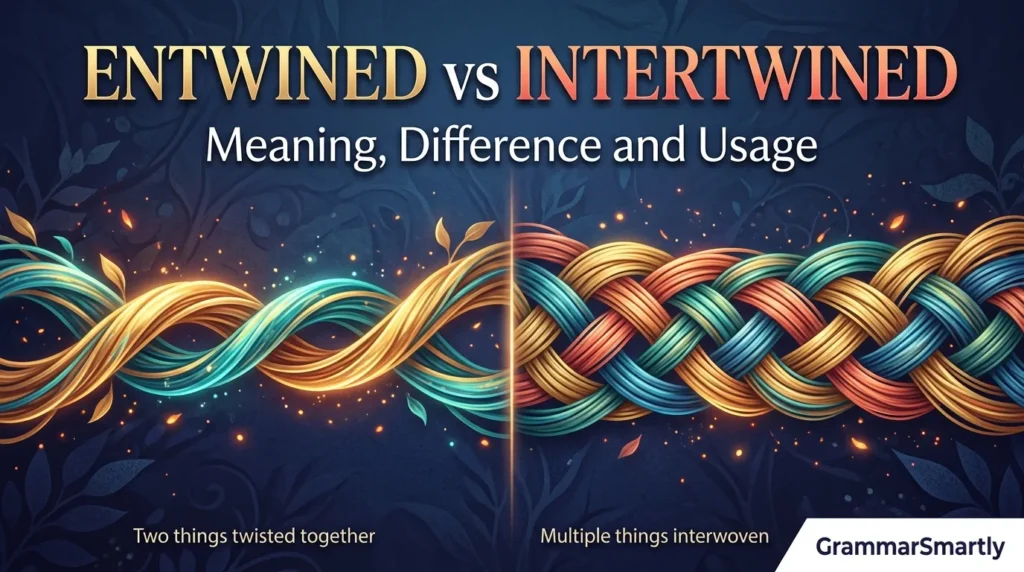
Choosing between entwined and intertwined can be confusing because both words describe things that are twisted together or closely connected. Neither spelling is incorrect. Both are standard English words, and they can often be used in the same sentence without changing its basic meaning. However, each word can emphasize a slightly different kind of connection.
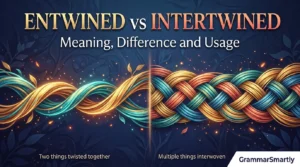
Entwined often brings to mind something wrapping around another object or two things becoming closely attached. Intertwined frequently emphasizes multiple things woven together or connected so closely that they are difficult to separate. These are tendencies, not strict grammatical rules.
Understanding the difference between alligators and crocodiles helps readers identify these reptiles by their appearance and behavior.
This guide explains the meanings, pronunciation, grammar, and practical differences between entwined and intertwined. You will also find original examples, spelling tips, related words, and answers to common questions to help you choose the right expression in everyday conversation and formal writing.
Quick Facts: Entwined vs Intertwined
| Feature | Entwined | Intertwined |
| Standard form | Entwined | Intertwined |
| Spelling status | Correct | Correct |
| Word type | Verb form and adjective | Verb form and adjective |
| Basic meaning | Twisted together, wrapped, or closely connected | Twisted or woven together, or closely connected |
| Pronunciation (UK) | /ɪnˈtwaɪnd/ | /ˌɪn.təˈwaɪnd/ |
| Main emphasis | Wrapping, attachment, or closeness | Interweaving, mutual connection, or interdependence |
| Usage status | Standard English | Standard English |
| Common error | Assuming it is less correct than intertwined | Assuming it must always describe more than two things |
Both words are appropriate in modern English. The best choice depends on the connection you want to describe, rather than a rule that makes one word correct and the other incorrect.
What Does Entwined vs Intertwined Mean?
The phrase entwined vs intertwined refers to a comparison between two closely related words. They share the idea of twisting, winding, or connecting things, but their emphasis can differ.
What Does Entwined Mean?

Entwined is the past tense and past participle of entwine. It can also function as an adjective describing things that are twisted together, wrapped around one another, or closely connected.
Examples:
- The ivy was entwined around the garden fence.
- The dancers stood with their fingers entwined.
- Her memories of childhood were entwined with the old farmhouse.
In the first example, the word describes a physical arrangement. In the other examples, it describes physical closeness and an association between memories and a place.
What Does Intertwined Mean?
Intertwined is the past tense and past participle of intertwine. It can also function as an adjective describing things twisted or woven together, or connected so closely that separating them becomes difficult.
Examples:
- The branches were intertwined above the narrow path.
- Technology and education are increasingly connected in practice.
- The family’s history is intertwined with the history of the town.
The word is useful for physical arrangements as well as relationships between ideas, events, institutions, and other abstract concepts.
The Main Difference in Simple English
Think about the image you want your reader to imagine.
- Entwined: Something winds around or becomes closely attached to something else.
- Intertwined: Two or more things become woven together or closely interconnected.
For example, a climbing plant may be entwined around a post, while the histories of two communities may be intertwined.
Both expressions are grammatically correct. The difference is one of emphasis, and either word may work in contexts where the other is also possible.
Is Entwined Correct?
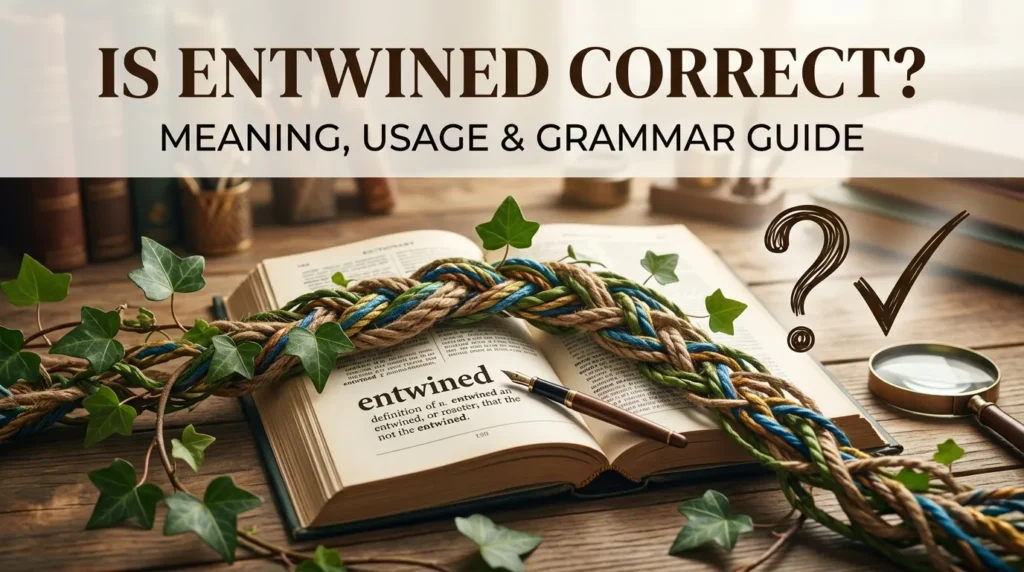
Yes. Entwined is a correct English word, not a misspelling of intertwined. It is the past tense and past participle of the verb entwine, and it can also be used as an adjective.
Correct examples include:
- The ribbon was entwined around the gift box.
- Their hands remained entwined throughout the walk.
- Art and politics have long been entwined in the region’s history.
The word can describe a physical arrangement or a figurative relationship. It is especially useful when the writing emphasizes winding, wrapping, or close attachment.
Do not replace entwined automatically just because intertwined sounds more elaborate. Choose the word that communicates the intended image most clearly.
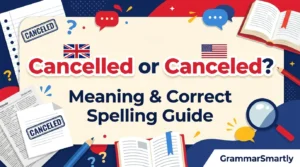
The extra letter can cause confusion, but British and American spelling of cancelled explains the main distinction.
Is Intertwined Correct?
Yes. Intertwined is also a correct English word. It is the past tense and past participle of intertwine and can describe things that are physically twisted together or figuratively connected.
Correct examples include:
- The roots were intertwined beneath the soil.
- The two projects became intertwined over time.
- Economic decisions and environmental concerns are intertwined.
Intertwined is particularly useful when the sentence emphasizes relationships among connected parts, subjects, or events. For instance, it can express the idea that a community’s culture and economy influence each other.
It is not limited to formal writing, and it is not automatically better than entwined. Both words can be appropriate in everyday English, descriptive writing, and academic discussions.
What Is the Correct Spelling?
Both entwined and intertwined are spelled correctly. The question is which word best fits your sentence.
The spelling patterns are straightforward:
- Entwined: e-n-t-w-i-n-e-d
- Intertwined: i-n-t-e-r-t-w-i-n-e-d
Both words contain the spelling twine, which helps explain their shared meaning. The longer form contains the additional element inter-.
Compare these sentences:
- The vine was entwined around the wooden arch.
- The branches were intertwined above the garden path.
Neither sentence contains a spelling mistake. The first emphasizes the vine’s winding around the arch, while the second emphasizes the branches growing through one another.
Common Spelling Errors to Avoid
The following are not standard spellings of the intended words:
- Entwinded instead of entwined
- Intertwinded instead of intertwined
- Intertwinned instead of intertwined
These errors can occur when writers add letters based on the appearance of another word or mistakenly double a consonant. Remember that the standard forms are entwined and intertwined.
Difference Between Entwined and Intertwined
| Feature | Entwined | Intertwined |
| Status | Standard English | Standard English |
| Meaning | Twisted together, wrapped, or closely linked | Twisted together or connected closely |
| Word type | Verb form or adjective | Verb form or adjective |
| Pronunciation (UK) | /ɪnˈtwaɪnd/ | /ˌɪn.təˈwaɪnd/ |
| Typical emphasis | Wrapping, attachment, closeness | Weaving, mutual connection, complexity |
| Literal usage | Vines, ribbons, hands, branches | Threads, roots, branches, cords |
| Figurative usage | Memories, relationships, personal histories | Cultures, economies, ideas, histories |
| Modern standard usage | Correct | Correct |
The central distinction is not a strict difference in meaning. It is a difference in the image or relationship the writer emphasizes. Entwined can foreground something winding around another thing, whereas intertwined can foreground the way separate elements become woven into one another.
Consider the following sentences:
- Their fingers were entwined. This emphasizes the physical closeness of their hands.
- Their professional and personal lives were intertwined. This highlights the close connection between two areas of life.
These are natural choices, but the distinction is flexible. You could also write their fingers were intertwined or their lives were entwined. Neither alternative is automatically wrong.
Meaning of Entwined and Intertwined
Literal Meaning
Both words can describe physical objects that twist or wind together.
Entwined often describes something wrapped around another object or things joined closely.
Example: A thin green vine was entwined around the wooden railing.
Intertwined often describes objects that twist or weave through one another.
Example: The flexible wires were intertwined inside the damaged cable.
These examples illustrate typical differences in emphasis, not exclusive meanings.
Figurative Meaning
Both words can also describe abstract connections that are not physically visible.
Entwined may describe a close association between a person, memory, place, or experience.
Example: Her earliest memories were entwined with the smell of fresh bread.
Intertwined may describe relationships between systems, events, ideas, or circumstances that affect one another.
Example: The success of the project was intertwined with the team’s ability to communicate.
In either case, the words create a figurative image of things being joined or woven together.
Common Contexts
| Context | Example | Why the Word Fits |
| Plants | The ivy was entwined around the pillar. | Emphasizes winding around an object |
| Hands | Their fingers were intertwined. | Describes fingers interlaced together |
| Relationships | Their lives became entwined. | Expresses a close personal connection |
| History | The two nations’ histories are intertwined. | Highlights a deep historical connection |
| Economics | Trade and employment are intertwined. | Suggests connected economic factors |
| Literature | The novel’s storylines are intertwined. | Describes connected narrative threads |
| Family | The families’ fortunes became entwined. | Emphasizes closely linked circumstances |
| Technology | Privacy and digital security are intertwined. | Shows that related issues cannot easily be considered separately |
Pronunciation
IPA Pronunciation
The following British and American pronunciations are listed by Cambridge Dictionary.
| Word | British English (IPA) | American English (IPA) |
| Entwined | /ɪnˈtwaɪnd/ | /ɪnˈtwɑɪnd/ |
| Intertwined | /ˌɪn.təˈwaɪnd/ | /ˌɪn.t̬ɚˈwaɪnd/ |
The main difference is the additional syllable in intertwined. The pronunciation of the middle portion also varies between British and American English.
Syllable Breakdown
- Entwined: en-twined, 2 syllables.
- Intertwined: in-ter-twined, 3 syllables.
The syllable divisions above are learner-friendly guides. Actual pronunciation can vary slightly with accent and speaking speed.
Pronunciation Tips
- In entwined, give the strongest stress to the second syllable: en-TWINED.
- In intertwined, the main stress falls on twined: in-ter-TWINED.
- The ending -ed does not form a separate syllable in either word.
- Both words contain the diphthong represented by the vowel sound in twine, although its precise realization differs by accent.
Do not rely on sound alone to choose between these words. Their meanings and spelling structures provide more useful clues.
Why Do People Confuse Entwined and Intertwined?
Several features make this pair easy to confuse.
1. Their Meanings Overlap
Both words can describe things that are twisted together or closely connected. Consequently, sentences about hands, vines, relationships, and histories may allow either choice.
2. They Share a Spelling Pattern
Both words contain twine and end in -ed. Their similar spelling makes them easy to compare, while the extra letters in intertwined make it longer.
3. They Both Work Figuratively
Neither word is restricted to physical objects. Writers can use both to discuss memories, relationships, ideas, events, or social conditions.
4. Writers May Assume There Is a Strict Rule
Some people assume that entwined refers only to physical wrapping and intertwined only to abstract relationships. That distinction is too rigid. Both words have literal and figurative uses.
5. The Prefix Can Suggest a Difference
The element inter- commonly conveys a sense of between, among, or mutual connection in English words. This can help explain why intertwined often suits relationships among connected elements, but it does not establish a rule that excludes entwined from those contexts.
The most reliable solution is to consider the sentence as a whole and decide whether it emphasizes wrapping, close attachment, or interconnection.
Origin and Etymology
The words are closely related through the verb twine, which conveys the idea of winding or twisting.
- Entwine combines en- with twine. The word refers to twisting things together or around something.
- Intertwine combines inter- with twine. The prefix inter- contributes the idea of connection between or among things.
The forms entwined and intertwined are the past-tense and past-participle forms of their respective verbs. They also function as adjectives in sentences describing the resulting condition.
This relationship between the words helps explain their overlapping meanings. However, the prefixes should be treated as clues to meaning rather than as proof that the words must always be used differently.
For reliable definitions and pronunciation, see the Cambridge Dictionary entry for entwine and the Cambridge Dictionary entry for intertwine.
How to Remember the Difference
The easiest memory strategy is to focus on the image each word brings to mind.
Quick Memory Trick
Remember these two ideas:
- Entwined = winding or attachment.
- Intertwined = interweaving or interconnectedness.
Picture a vine wrapping around a pole to remember entwined. Picture several threads crossing through one another to remember intertwined.
This is a practical memory aid, not an absolute rule. The words overlap, so context remains important.
Word-Family Connection
| Word | Meaning or Function | Example |
| Twine | To wind or twist around something | The wire began to twine around the frame. |
| Entwine | To twist together or around something | The plant can entwine itself around a support. |
| Entwined | Past form or adjective | The stems were entwined around the stake. |
| Intertwine | To twist or connect together | The branches intertwine above the path. |
| Intertwined | Past form or adjective | Their responsibilities became intertwined. |
| Intertwining | The -ing form of the verb | The intertwining roots held the soil together. |
Connecting the two target words to twine gives you a shared spelling and meaning pattern to remember.
Examples in Sentences
The following 15 pairs show how entwined and intertwined can be used in different situations. The sentences are original examples intended to illustrate the meanings, not quotations from published sources.
| No. | Entwined Example | Intertwined Example |
| 1 | The ivy was entwined around the garden gate. | The tree branches were intertwined above the walkway. |
| 2 | A silk ribbon was entwined around the bouquet. | Several strands of colored thread were intertwined to form a cord. |
| 3 | The dancers stood with their arms entwined. | Their fingers were intertwined as they watched the sunset. |
| 4 | Her childhood memories were entwined with visits to the coast. | The family’s traditions and history were intertwined. |
| 5 | The climbing rose was entwined around the wooden trellis. | The roots of the neighboring plants were intertwined underground. |
| 6 | The bracelet was entwined with a delicate silver chain. | The thin wires were intertwined inside the casing. |
| 7 | His sense of identity was entwined with his hometown. | Language and cultural identity are often intertwined. |
| 8 | The two characters’ destinies became entwined after their meeting. | The characters’ storylines were intertwined throughout the novel. |
| 9 | The old vines were entwined around the stone column. | The roots of the two trees were intertwined beneath the ground. |
| 10 | The history of the village was entwined with its fishing industry. | The village’s economy and fishing traditions were intertwined. |
| 11 | Her professional ambitions became entwined with the family’s plans. | The responsibilities of the two departments became intertwined. |
| 12 | A narrow creeper was entwined around the balcony rail. | Several climbing stems were intertwined across the garden wall. |
| 13 | The artist’s childhood experiences were entwined with the themes of the painting. | Memory and imagination were intertwined in the finished work. |
| 14 | The couple’s future became entwined after they started a business together. | Their business interests became intertwined with their family finances. |
| 15 | The decorative cord was entwined around the handle of the basket. | The loose fibers were intertwined to create a stronger rope. |
What These Examples Teach
Three useful observations emerge from the examples:
- Physical descriptions: Both words can describe vines, branches, fibers, and other objects that twist together.
- Personal connections: Both can describe relationships, memories, identities, and shared experiences.
- Complex relationships: Intertwined can be particularly effective when the sentence emphasizes connected systems or elements that influence one another.
The distinction is flexible. Do not judge a sentence solely by whether it uses one word or the other. Judge whether the word conveys the intended relationship.
Common Mistakes to Avoid
- Treating one word as a misspelling of the other: Both entwined and intertwined are standard forms.
- Assuming they are always interchangeable: They overlap, but one may communicate the intended emphasis more clearly.
- Restricting entwined to physical objects: It can also describe abstract connections, such as memories and experiences.
- Restricting intertwined to abstract subjects: It can describe physical objects, including branches, roots, threads, and wires.
- Adding unnecessary letters: Write entwined, not entwinded.
- Doubling the wrong consonant: Write intertwined, not intertwinned.
- Using intertwined to suggest a relationship without context: The word indicates a close connection, but the surrounding sentence should explain what is connected.
- Assuming intertwined always means inseparable: It can suggest a connection that is difficult to separate, but the degree of connection depends on context.
Similar Commonly Misspelled Words
The following words are useful comparisons because they involve related spelling patterns, past-participle endings, or easily confused forms.
| Common Error or Confusion | Correct Form | Reason for Confusion |
| Entwinded | Entwined | An unnecessary d is added before the past-tense ending. |
| Intertwinned | Intertwined | The final consonant is incorrectly doubled. |
| Intertwinded | Intertwined | Extra letters are inserted into the word. |
| Tyeing | Tying | The spelling changes when tie takes -ing. |
| Died vs. Dyed | Both correct | The words sound alike but have different meanings. |
| Layed | Laid | Laid is the standard past tense of lay. |
| Writed | Wrote | Wrote is the standard past tense of write. |
| Binded | Bound | Bound is the standard past tense and past participle of bind. |
The first three examples are nonstandard spellings of the intended words. The remaining entries illustrate other spelling or word-form problems, rather than errors that are unique to entwined and intertwined.
Related Words
Synonyms
The best synonym depends on whether you are describing physical twisting or a figurative connection.
| Word | Meaning and Distinction |
| Twisted | Turned or wound into a curved or spiral shape. |
| Woven | Made by crossing strands or materials over and under one another. |
| Interwoven | Woven together or closely connected; often emphasizes a combined structure. |
| Tangled | Twisted together in a confused or disordered way. |
| Connected | Joined or related, without necessarily suggesting twisting. |
| Linked | Joined or associated, often in a broader sense. |
| Interconnected | Connected in a network or in ways that affect one another. |
| Entangled | Caught, twisted, or involved in a complicated situation. |
These words are not exact substitutes in every sentence. For example, connected may describe a relationship without suggesting the winding image conveyed by entwined.
Antonyms
There is no single antonym that works for every use of entwined and intertwined. Depending on the intended meaning, useful contrasts include:
- Separated: No longer together or in the same place.
- Untangled: Freed from knots or confusing twists.
- Disconnected: No longer linked or associated.
- Independent: Not dependent on another person, thing, or system.
For example, the cables were intertwined contrasts naturally with the cables were separated or the cables were untangled. In a figurative sentence, independent may provide a better contrast.
Related Forms
| Word | Part of Speech | Example |
| Twine | Verb or noun | The wire began to twine around the frame. |
| Entwine | Verb | The branches entwine around the support. |
| Entwined | Past participle or adjective | The stems remained entwined. |
| Entwining | Present participle or gerund | The entwining vines covered the fence. |
| Intertwine | Verb | The strands intertwine to form a pattern. |
| Intertwined | Past participle or adjective | Their interests were intertwined. |
| Intertwining | Present participle or gerund | The intertwining roots formed a dense network. |
These forms belong to the same word families and are useful for expanding vocabulary without confusing the two main words.
Grammar Tips
1. Use the Correct Verb Form
Both words come from verbs:
- Present: The vines entwine around the post.
- Past: The vines entwined around the post.
- Present participle: The vines are entwining around the post.
- Past participle: The vines have entwined around the post.
The same general pattern applies to intertwine.
- Present: The branches intertwine.
- Past: The branches intertwined.
- Present participle: The branches are intertwining.
- Past participle: The branches have intertwined.
2. Use the Past Participle in Passive Constructions
Both words can appear in passive constructions.
- The ribbon was entwined around the package.
- The branches were intertwined by the wind.
The first sentence describes the ribbon’s arrangement. The second is grammatically possible, although the surrounding context should make the intended cause clear.
3. Use Adjectives Naturally
The words can describe a condition or relationship.
- The entwined stems were difficult to separate.
- Their interests were closely intertwined.
Adverbs such as closely, deeply, and inextricably can modify intertwined when the context supports the intended degree of connection.
4. Understand the Phrase “Intertwined With”
The phrase intertwined with is common when describing relationships between abstract things.
Examples:
- The region’s prosperity is intertwined with its transport network.
- Her memories were intertwined with the family’s traditions.
The preposition with identifies the other element in the relationship. The same construction is also possible with entwined, depending on the sentence.
Writing Tips
Academic Writing
Use intertwined when discussing closely connected systems, concepts, causes, or historical developments, particularly when mutual influence is important.
Example: The development of urban transport and housing policy became intertwined over several decades.
Use entwined when a description of close association or winding is more appropriate. Neither word should be selected simply to make a sentence sound more sophisticated.
Professional Writing
Be specific about the elements that are connected.
Less informative: Several issues are intertwined.
Clearer: Staffing costs and delivery schedules are intertwined because both depend on the number of available drivers.
The second sentence explains the relationship instead of relying on the adjective alone.
Essays and Examinations
If asked to distinguish the words, explain that both are correct and that their meanings overlap. Give examples illustrating the typical difference in emphasis rather than claiming that they have completely separate meanings.
Emails and Everyday Writing
Use the simpler expression when it communicates your meaning more clearly. For instance, the two schedules are closely connected may be more direct than the two schedules are intertwined if you do not need the imagery of interweaving.
Proofreading
When checking a document, look for two things:
- Confirm that the spelling is either entwined or intertwined.
- Check that the surrounding sentence makes the relationship between the things clear.
A correctly spelled word can still be a poor stylistic choice if it obscures the intended meaning.
Quick Spelling Checklist
Use this checklist when choosing between the two words.
| Check | Correct Form or Rule |
| Standard spelling | Entwined or intertwined |
| Common misspelling | Entwinded or intertwinned |
| Meaning | Twisted together, wrapped, or closely connected |
| Pronunciation | Entwined has 2 syllables; intertwined has 3 |
| Word type | Both can function as verb forms and adjectives |
| Key spelling pattern | Both contain twine |
| Common usage | Physical and figurative connections |
| Final proofreading check | Choose the word that best expresses the intended relationship |
Key Takeaways
- Both entwined and intertwined are correct English words.
- Entwined often emphasizes winding, wrapping, or close attachment.
- Intertwined often emphasizes interweaving, mutual connection, or interdependence.
- Both words can describe physical objects and abstract relationships.
- Their meanings overlap, so the distinction is not an absolute grammar rule.
- Entwined has two syllables, while intertwined has three.
- Remember the shared word twine to help with spelling and meaning.
- Choose the word that makes your sentence clearest, rather than assuming one is always better.
Conclusion
Understanding the difference between entwined and intertwined is mainly about recognizing their shared meaning and choosing the emphasis that suits your sentence. Both are standard English words, and neither is an incorrect spelling of the other.
Use entwined when you want to emphasize winding, wrapping, or close attachment, such as a vine around a railing or two people’s fingers joined together. Choose intertwined when you want to highlight elements woven together or closely connected, such as histories, ideas, relationships, or economic systems.
These preferences are useful guidelines, not rigid rules. Both words can describe literal and figurative relationships, and their meanings often overlap. To remember the distinction, connect entwined with winding and intertwined with interweaving. When proofreading, focus on the relationship described in your sentence. With that approach, you can use both words confidently in academic writing, professional communication, and everyday English.
Frequently Asked Questions
1. What is the difference between entwined and intertwined?
Both words describe things that are twisted together or closely connected. Entwined often emphasizes winding or attachment, while intertwined can emphasize mutual connection or interweaving. The difference is one of emphasis rather than a strict rule, and the words are interchangeable in some contexts.
2. Are entwined and intertwined both correct?
Yes. Both are standard English words. Entwined is a form of entwine, and intertwined is a form of intertwine. Neither is a misspelling of the other. Choose according to the meaning and emphasis you want to convey in your sentence.
3. Does entwined mean the same as intertwined?
Their meanings overlap considerably, but they are not identical in every context. Both can describe physical objects or figurative connections. Entwined may highlight wrapping or attachment, whereas intertwined often highlights things woven together or connected in a complex relationship.
4. Can I use entwined and intertwined interchangeably?
Often, yes. For example, both their lives were entwined and their lives were intertwined are correct. However, the words can create slightly different impressions. Consider whether your sentence emphasizes close attachment, physical winding, or mutual connections before deciding which one to use.
5. What does entwined mean in a relationship?
In a relationship, entwined describes people whose lives, experiences, or circumstances have become closely connected. For example, Their lives became entwined after years of friendship. It can suggest emotional closeness, shared experiences, or attachment without necessarily implying that the people have lost their independence.
6. What does intertwined mean in simple English?
Intertwined means twisted or woven together, or connected so closely that separating the elements may be difficult. Literally, it can describe branches growing through one another. Figuratively, it can describe ideas, histories, or circumstances that influence each other and cannot easily be understood in isolation.
7. How do you pronounce entwined and intertwined?
In British English, entwined is pronounced /ɪnˈtwaɪnd/, while intertwined is pronounced /ˌɪn.təˈwaɪnd/. The first has two syllables, and the second has three. Both place their main stress on the syllable containing twined.
8. Is intertwined more formal than entwined?
Not necessarily. Both words can appear in everyday conversation, creative writing, and formal prose. Intertwined may suit discussions of interconnected systems or ideas, while entwined may suit descriptions emphasizing winding or attachment. The subject and intended meaning matter more than formality alone.
9. What is the opposite of entwined or intertwined?
There is no single opposite for every context. Separated describes things that are no longer together, untangled describes things freed from twists or knots, and disconnected describes things that are no longer linked. The best antonym depends on whether the original sentence is literal or figurative.
10. How can I remember the difference between entwined and intertwined?
Associate entwined with winding around something and intertwined with several elements weaving together. Picture a vine wrapped around a post for the first word and crossed threads for the second. This memory aid helps distinguish their typical emphasis without treating it as a strict rule.
11. Is entwined a past-tense verb or an adjective?
It can be both, depending on its use. In the vines entwined around the post, it is the past-tense form of entwine. In the entwined vines were difficult to separate, it describes the vines and functions as an adjective.
12. What is the correct spelling, entwined or intertwined?
Both spellings are correct. Write entwined when using the past form or adjective of entwine, and intertwined when using the corresponding form of intertwine. Avoid nonstandard spellings such as entwinded and intertwinned when you intend these standard English words.


1 thought on “Entwined vs Intertwined: Meaning, Difference and Usage”