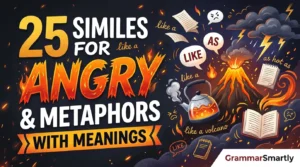

Similes for angry help describe feelings of frustration, irritation, and intense rage in a vivid and memorable way. Instead of simply saying someone is angry, you can use a comparison such as “as mad as a hornet” to make the emotion easier to imagine. These expressions make everyday conversations, stories, poems, and school assignments more engaging.
Similes and metaphors describe anger in different ways. Some expressions communicate mild annoyance, while others convey explosive fury or deeply suppressed resentment. In this article, you will discover 25 similes and metaphors for angry, each with a simple meaning and an example sentence to help you understand how to use them correctly.
What Is the Difference Between Similes and Metaphors?
A simile compares two different things using words such as “like” or “as.” It helps readers understand an emotion by comparing it with something familiar.
– Simile example: He was as mad as a hornet when he discovered the damage to his car.
A metaphor describes one thing as another to create a stronger or more imaginative impression. It does not usually use “like” or “as” to make the comparison.
– Metaphor example: His anger was a volcano waiting to erupt.
The main difference is that a simile makes an explicit comparison, while a metaphor presents the comparison more directly. Both can make descriptions of anger more expressive and powerful.
25 Similes for Angry
These 25 similes describe different forms of anger, from sudden irritation to uncontrollable rage. Some are familiar expressions, while others are creative comparisons that can be useful in descriptive writing.
1. As Mad as a Hornet
- Meaning: Extremely angry or easily provoked.
- Example: Dad was as mad as a hornet when he discovered that someone had scratched his new car.
2. As Red as a Beetroot
- Meaning: Having a deeply flushed face because of anger, embarrassment, or another strong emotion.
- Example: She turned as red as a beetroot when her brother blamed her for the broken vase.
3. Like a Bull in a China Shop
- Meaning: Acting aggressively or carelessly, often causing damage or disruption. This established expression describes clumsy, forceful behavior rather than anger alone.
- Example: He stormed into the office like a bull in a china shop, shouting at everyone in his path.
4. Like a Pressure Cooker About to Blow
- Meaning: Holding in so much anger that an emotional outburst seems imminent.
- Example: After hours of unfair criticism, Mark was like a pressure cooker about to blow.
5. As Furious as a Storm at Sea
- Meaning: Experiencing intense, turbulent anger.
- Example: She was as furious as a storm at sea when she learned that her trust had been betrayed.
6. Like a Ticking Time Bomb
- Meaning: Appearing calm on the surface while being close to an angry outburst.
- Example: After being insulted repeatedly, he sat in silence like a ticking time bomb.
7. As Hot as Fire
- Meaning: Feeling intense anger that seems to burn inside.
- Example: I was as hot as fire when I realized that someone had taken credit for my work.
8. Like a Volcano Ready to Erupt
- Meaning: Suppressing powerful anger that could burst out at any moment.
- Example: She looked like a volcano ready to erupt after hearing the insulting remarks.
9. As Snappy as a Guard Dog
- Meaning: Responding sharply or aggressively when irritated or provoked.
- Example: He was as snappy as a guard dog after a sleepless night and a stressful meeting.
10. Like a Wild Animal in a Cage
- Meaning: Feeling trapped, frustrated, and increasingly aggressive.
- Example: He paced the room like a wild animal in a cage while waiting for the unfair decision to be reversed.
11. As Fierce as a Lion
- Meaning: Showing intense anger and a strong willingness to confront someone.
- Example: She became as fierce as a lion when someone insulted her younger brother.
12. Like Thunder Before a Storm
- Meaning: Giving signs of anger before a major confrontation or outburst.
- Example: His harsh voice sounded like thunder before a storm as he confronted the team about their mistakes.
13. As Sharp as a Thorn
- Meaning: Speaking in a cutting or hurtful way because of anger.
- Example: Her words were as sharp as a thorn when she confronted him about his lies.
14. Like a Raging River
- Meaning: Experiencing anger that feels powerful and difficult to control.
- Example: His frustration rushed through him like a raging river after the repeated delays.
15. As Explosive as Fireworks
- Meaning: Reacting with sudden, intense anger.
- Example: Her response was as explosive as fireworks when she discovered the deliberate deception.
16. Like a Cornered Cat
- Meaning: Becoming defensive or aggressive when feeling threatened or trapped.
- Example: He reacted like a cornered cat when his colleagues questioned his decision.
17. As Cold as Ice
- Meaning: Showing anger through emotional distance, silence, or an unfriendly manner rather than shouting.
- Example: She was as cold as ice toward him after he broke his promise.
18. Like a Boiling Kettle
- Meaning: Becoming increasingly irritated until an angry reaction seems likely.
- Example: He was like a boiling kettle after listening to the same excuse for the fifth time.
19. As Bitter as Gall
- Meaning: Feeling deeply resentful or angry about an unpleasant experience.
- Example: She felt as bitter as gall when she remembered how unfairly she had been treated.
20. Like a Dog With Its Hackles Raised
- Meaning: Appearing defensive, hostile, or ready to react aggressively.
- Example: He stood like a dog with its hackles raised when his rival challenged him.
21. As Stormy as the Weather
- Meaning: Having an angry, unsettled mood that changes quickly or affects others.
- Example: His mood was as stormy as the weather after the argument with his business partner.
22. Like a Bear With a Sore Head
- Meaning: Being unusually irritable, grumpy, or unpleasant.
- Example: I was like a bear with a sore head after being interrupted all night.
23. As Fierce as a Wildfire
- Meaning: Experiencing anger that spreads quickly and becomes difficult to contain.
- Example: Her anger grew as fierce as a wildfire when she heard the false accusations.
24. Like a Snarling Wolf
- Meaning: Showing hostility through an aggressive expression, voice, or posture.
- Example: He turned toward the intruder like a snarling wolf when he heard the window break.
25. As Unsettled as a Thunderstorm
- Meaning: Feeling emotionally turbulent and unable to settle down because of anger.
- Example: She felt as unsettled as a thunderstorm after the heated disagreement with her friend.
25 Metaphors for Angry
Metaphors for angry describe anger directly through images of fire, storms, weapons, pressure, and other powerful forces. Some are familiar figurative expressions, while others are original descriptive metaphors suitable for creative writing.
1. His Anger Was a Volcano
- Meaning: His anger was powerful and threatened to erupt suddenly.
- Example: His anger was a volcano after he discovered that his business partner had deceived him.
2. She Was a Pressure Cooker
- Meaning: She was holding in intense frustration that could eventually explode.
- Example: After weeks of unreasonable demands, she was a pressure cooker ready to burst.
3. Anger Was a Fire Inside Him
- Meaning: He felt a strong, burning emotion that was difficult to ignore.
- Example: Anger was a fire inside him as he listened to the unfair accusations.
4. His Words Were Daggers
- Meaning: His angry words were intended to hurt or deeply upset someone.
- Example: His words were daggers when he accused his friend of betraying him.
5. She Was a Walking Thunderstorm
- Meaning: She was visibly angry and brought a tense atmosphere wherever she went.
- Example: After the meeting, she was a walking thunderstorm, glaring at anyone who approached her.
6. His Temper Was a Matchstick
- Meaning: He became angry very quickly, often over small problems.
- Example: His temper was a matchstick, igniting whenever someone questioned his choices.
7. Her Anger Was a Wildfire
- Meaning: Her anger spread rapidly and became difficult to control.
- Example: Her anger was a wildfire that consumed the calm atmosphere of the room.
8. He Was a Boiling Kettle
- Meaning: He was becoming increasingly irritated and was close to losing his temper.
- Example: By the end of the argument, he was a boiling kettle ready to whistle.
9. His Mind Was a Battlefield
- Meaning: He was struggling with conflicting emotions and angry thoughts.
- Example: After the betrayal, his mind was a battlefield of resentment and regret.
10. Her Eyes Were Flames
- Meaning: Her eyes showed intense anger or fierce determination.
- Example: Her eyes were flames when she confronted the person who had insulted her family.
11. Anger Was a Storm in His Chest
- Meaning: He felt intense emotional turmoil that he struggled to control.
- Example: Anger was a storm in his chest as he waited for an explanation.
12. His Temper Was a Loaded Gun
- Meaning: His anger was dangerous and could erupt with little warning.
- Example: His temper was a loaded gun during the heated negotiations.
13. Her Silence Was a Wall of Ice
- Meaning: Her silence created emotional distance and communicated resentment or displeasure.
- Example: After their disagreement, her silence was a wall of ice between them.
14. He Was a Pressure Valve Without an Outlet
- Meaning: He was accumulating frustration without finding a way to release it.
- Example: After another stressful day, he was a pressure valve without an outlet.
15. Her Anger Was a Tidal Wave
- Meaning: Her anger was overwhelming and difficult to resist.
- Example: Her anger was a tidal wave when she learned how badly her colleague had treated her.
16. His Voice Was a Thunderclap
- Meaning: His loud, forceful voice expressed anger and startled the people around him.
- Example: His voice was a thunderclap when he demanded an explanation for the missing money.
17. Resentment Was Poison in His Heart
- Meaning: His lasting anger was damaging his emotional well-being and relationships.
- Example: Resentment was poison in his heart after years of unresolved family conflict.
18. Her Patience Was a Fraying Rope
- Meaning: She was running out of patience and becoming increasingly irritated.
- Example: Her patience was a fraying rope after another missed deadline.
19. His Anger Was a Prison
- Meaning: His anger trapped him in negative feelings and prevented him from moving forward.
- Example: His anger was a prison that kept him from rebuilding his friendship.
20. The Argument Was a Powder Keg
- Meaning: The disagreement was a tense situation that could quickly become explosive.
- Example: The argument was a powder keg after both colleagues began making personal accusations.
21. Her Temper Was a Wild Horse
- Meaning: Her anger was difficult to control once it took hold.
- Example: Her temper was a wild horse that carried the conversation far beyond the original disagreement.
22. His Words Were Burning Arrows
- Meaning: His angry remarks caused emotional pain.
- Example: His words were burning arrows that left his brother feeling humiliated.
23. Anger Was a Shadow Over Her Day
- Meaning: Her anger affected her mood and prevented her from enjoying other experiences.
- Example: Anger was a shadow over her day after the unfair criticism from her supervisor.
24. His Resentment Was a Rusting Chain
- Meaning: His lingering resentment weighed him down and kept him tied to the past.
- Example: His resentment was a rusting chain that prevented him from forgiving his former friend.
25. Her Fury Was a Raging Inferno
- Meaning: Her anger was extremely intense and difficult to contain.
- Example: Her fury was a raging inferno when she discovered that someone had deliberately destroyed her work.
How to Use Similes and Metaphors for Angry Effectively
- Use them in creative writing: Describe an angry character as a volcano ready to erupt to build suspense before a confrontation.
- Choose the right intensity: Use “as grumpy as a bear with a sore head” for everyday irritation and “her fury was a raging inferno” for extreme anger.
- Improve school assignments: Add a relevant simile to a descriptive paragraph to show how a character reacts to unfair treatment instead of simply stating that the character is angry.
- Make dialogue more expressive: A character might say, “I’m boiling with anger,” to communicate frustration in a natural conversational style.
- Use them in poetry: Images of fire, thunder, and storms can convey emotional intensity and create a vivid atmosphere.
- Match the expression to the situation: A metaphor involving a prison may communicate long-lasting resentment, while a volcano suggests anger that could erupt suddenly.
- Avoid overusing figurative language: One strong comparison is often more effective than several competing images in the same paragraph.
Why Are Similes and Metaphors Useful for Angry?
Similes and metaphors help readers understand the intensity, appearance, and consequences of anger. They turn an abstract emotion into an image that readers can picture, making descriptions more memorable and emotionally engaging.
For example, describing someone as “as mad as a hornet” suggests immediate irritation, while saying “his anger was a volcano” suggests a powerful emotion that may eventually erupt. These comparisons allow writers to communicate different shades of anger without relying on repetitive words such as mad, furious, or upset.
Learning these expressions also helps students improve descriptive essays, develop believable characters, and communicate emotions more precisely. By choosing comparisons that suit the situation, writers can show not only how angry someone feels but also how that anger affects their behavior and relationships.
Conclusion
Similes for angry and metaphors for anger make emotional descriptions clearer, more vivid, and more engaging. Similes use comparisons with words such as “like” or “as,” while metaphors describe anger through direct figurative comparisons involving images such as fire, storms, and volcanoes.
Choose expressions that match the intensity and context of the emotion you want to describe. Whether you are writing a story, completing a school assignment, composing poetry, or improving everyday communication, the right figurative expression can make your description of anger much more powerful.
Frequently Asked Questions
What is a simile for angry?
“As mad as a hornet” is a recognizable simile for angry. It describes someone who is extremely irritated or easily provoked.
What is a metaphor for angry?
“His anger was a volcano” is a metaphor for angry. It suggests that his anger is powerful and could erupt suddenly.
What are some similes for someone who is very angry?
Examples include “as mad as a hornet,” “as fierce as a lion,” and “as hot as fire.” These comparisons communicate different degrees of anger and aggression.
What is the difference between an angry simile and an angry metaphor?
An angry simile compares anger to something else using “like” or “as,” such as “She was like a volcano.” An angry metaphor makes a direct comparison, such as “She was a volcano.”
How can I describe anger without using the word angry?
You can describe anger through actions, expressions, and figurative language. For example, write “His jaw tightened, and his eyes flashed with fire” instead of simply saying “He was angry.”
Which metaphors describe uncontrollable anger?
Metaphors such as “a raging inferno,” “a wildfire,” and “a volcano ready to erupt” suggest intense anger that is difficult to control.
Can I use similes for angry in school essays?
Yes. Similes can make descriptive essays and stories more engaging by showing how anger affects a character’s expression, behavior, and thoughts. Choose an expression that fits the scene and avoid overusing comparisons.
How do I choose the best metaphor for anger?
Consider the type of anger you want to communicate. Fire can suggest burning resentment, a storm can convey emotional turmoil, and a prison can represent anger that traps someone in the past.